Craft versus quality
October 2, 2026
“Craft” is one of those words designers use all the time and rarely define. We say something is well crafted and tell designers to work on their craft. Usually what we mean is some vague combination of polish, taste, and attention to detail. It’s often misused as another word for quality. They’re related, but they’re not the same thing.
Quality describes how well something performs its intended function: Does it work? Is it reliable? Does it hold up once people start using it? Craft is the care, judgment, and intent that went into getting there.
A product can be high quality without feeling particularly well crafted. It could be fast, secure, and rarely crashes. The thing “works” but the path shows minimal judgment, taste, or care. a few ways the lack of craft shows up:
- Important actions are buried three levels deep because nobody took the time to decide what belongs on the main screen.
- Copy is cold: “Submit,” “Process,” “View,” instead of language that reflects what the user is trying to do.
- The design system was applied mechanically, so every screen “follows the system,” but no one asked whether it could be simpler, different, or reassuring.
If our goal is simply “make high quality products,” we can define a standard and work toward it. Craft is the point of view that shapes how we build: the shortcuts we don't take, the tradeoffs we’re willing to make, and the emotional reaction we want to create.
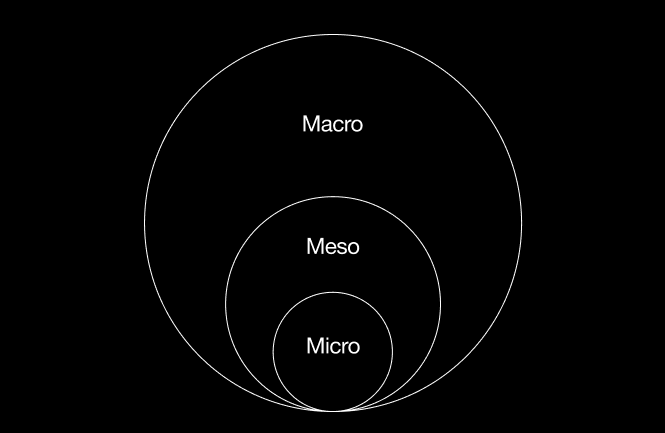
I think about it at three scales:
Macro
Macro craft is the architecture of the product. The decisions about where things live, how someone moves through the system, and how the product scales without collapsing under its own weight.
You notice good macro craft when you don't have to think very hard about where to begin, you understand where you are and you know what happens next. It also shows up six months later, when the team adds something nobody anticipated and the product doesn't need to be reorganized around it.
In Notion, the "blocks" system keeps the mental model simple even as you add views, relations, and templates. One clear organizing concept that scales instead of a pile of unrelated modes. A beautifully designed button can't rescue a product whose underlying structure makes no sense.
Meso
Meso craft is components, interaction patterns, visual rhythm, navigation, and content structures behaving consistenty. Similar concepts look and work alike. Different concepts are different enough that people can tell them apart.
In iOS: lists, tab bars, navigation bars, and system controls all behave consistently across apps, so learning how to scroll, swipe back, reveal actions, or change settings in one place teaches you how to operate the rest.
This is where design systems can become dangerous. A design system can create consistency but it cannot create judgment. Applying the same component everywhere because "that's what's in the system" isn't craft. Sometimes a particular situation needs to behave differently.
Micro
Micro craft is what most people picture first: the way the product feels in the hand-to-hand moments where someone is actually using it.
In Linear, micro craft shows up in the details: keyboard shortcuts respond instantly, issues move the moment you hit a key, subtle motion helps you track where a card went, spacing and typography make dense views readable, and error messages tell you what actually went wrong. None of these details change what the product is, but together they make it feel sharp, fast, and trustworthy.
These details can seem inconsequential in isolation, but products are experienced as a sequence of tiny moments. Each one is a small negotiation of trust. Micro craft is about shaping those moments so they feel intentional instead of accidental, so the interface feels like it’s meeting you half way instead of making you work to decode it. When that layer is neglected, the product might still be “correct,” but it feels stiff and uncaring. When it’s done well, you stop noticing the interface at all and just feel like you’re moving cleanly through the thing you’re trying to do.
Craft isn’t a luxury you sprinkle on top of a working product. It’s the set of decisions that determine what “working” actually feels like, from the structure to the patterns to the smallest interaction. You can hit your quality targets without much craft, but the products we call “well crafted” are the ones where that care runs all the way through and you can tell someone was paying attention.
Get new notes by email
I write about design, technology, and the things I’m figuring out along the way.